3-tab vs. architectural shingles
Older shingle roofs are often 3-tab shingles. They are thin and flat, with even slots.
Most new roofs use architectural shingles. They are thicker, with two or more layers glued together. That gives a deeper, shadowed look and better wind strength. Many brands offer longer warranties on architectural shingles too.
If your 3-tab roof needs a repair, matching can be hard, since many 3-tab styles are no longer made. That is one reason a worn 3-tab roof may be better replaced than patched.
Repair or replace your shingle roof?
If a storm took a few shingles and the rest of the roof is in good shape, a repair is usually right.
If the shingles are brittle, curled, and bald all over, new shingles will not seal well to the old ones. Leaks may keep popping up. Then it is often time for a full replacement. Our roof replacement page explains that process.
Not sure? A roof inspection gives you photos and a clear answer.
Wind and storm damage on shingles
Strong wind can lift a shingle and break the glue strip that holds it down. Sometimes it stays in place but has a crease. A creased shingle can leak or blow off in the next storm.
Hail can knock off granules and leave dark bruises. Falling limbs can punch holes. After a storm, look for shingles in the yard, and for flipped or missing ones on the roof. Take photos from the ground. Do not climb up.
Ventilation for shingle roofs
Your attic should pull in cool air at the eaves and let warm air out near the ridge. Ridge vents, box vents, and soffit vents are common ways to do this.
Too little airflow can bake shingles and lead to ice dams in winter. Mixing different exhaust vent types on one roof can also cause problems. We check this whenever we work on a shingle roof.
Flashing on shingle roofs
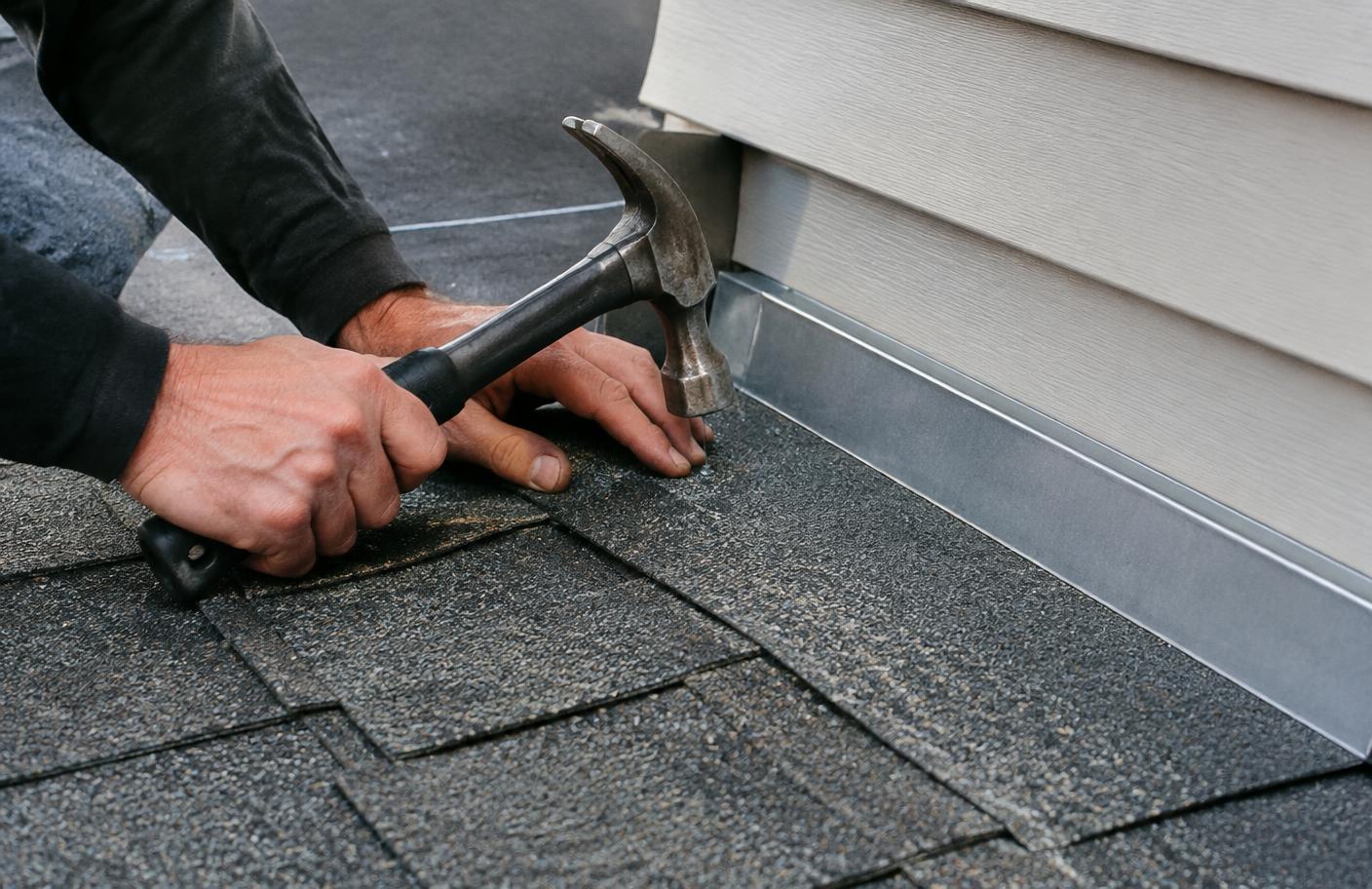
Where a roof meets a wall, each row of shingles should have its own small piece of step flashing. Around chimneys, there should be step flashing plus counter-flashing set into the brick.
Gobs of tar or caulk in place of real flashing are a common reason for leaks. If a leak is near a chimney, see our chimney flashing repair page.
Choosing a shingle color and style
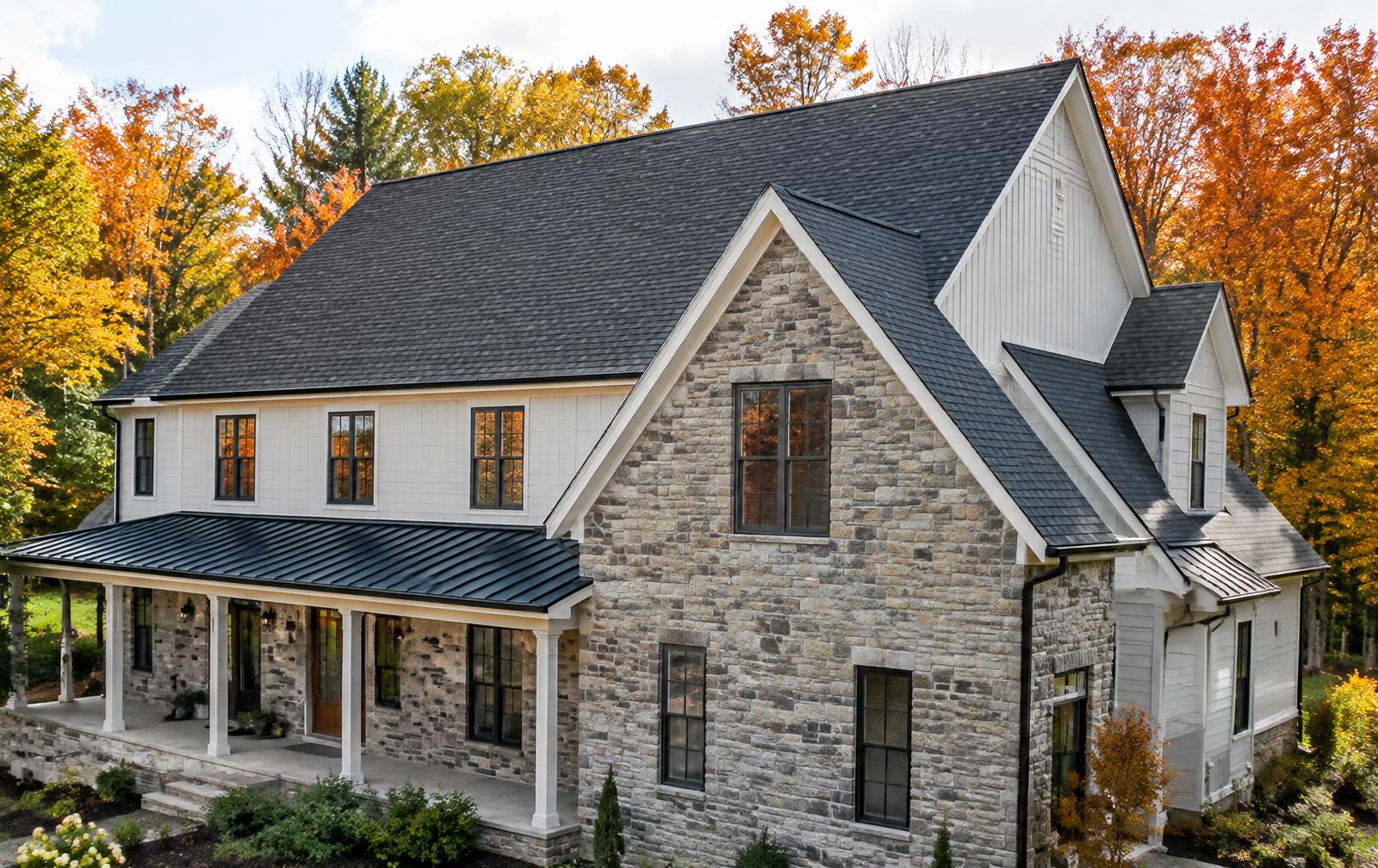
Pick a color that works with your brick, stone, or siding. Grays and blacks are common. Browns and blends suit many stone homes.
Some shingles are made to look like slate or cedar. They can be a good fit when real slate is not in the plan. If your home is in a historic district, ask your local office before you change roof material or color.