
Step 1: Document the damage
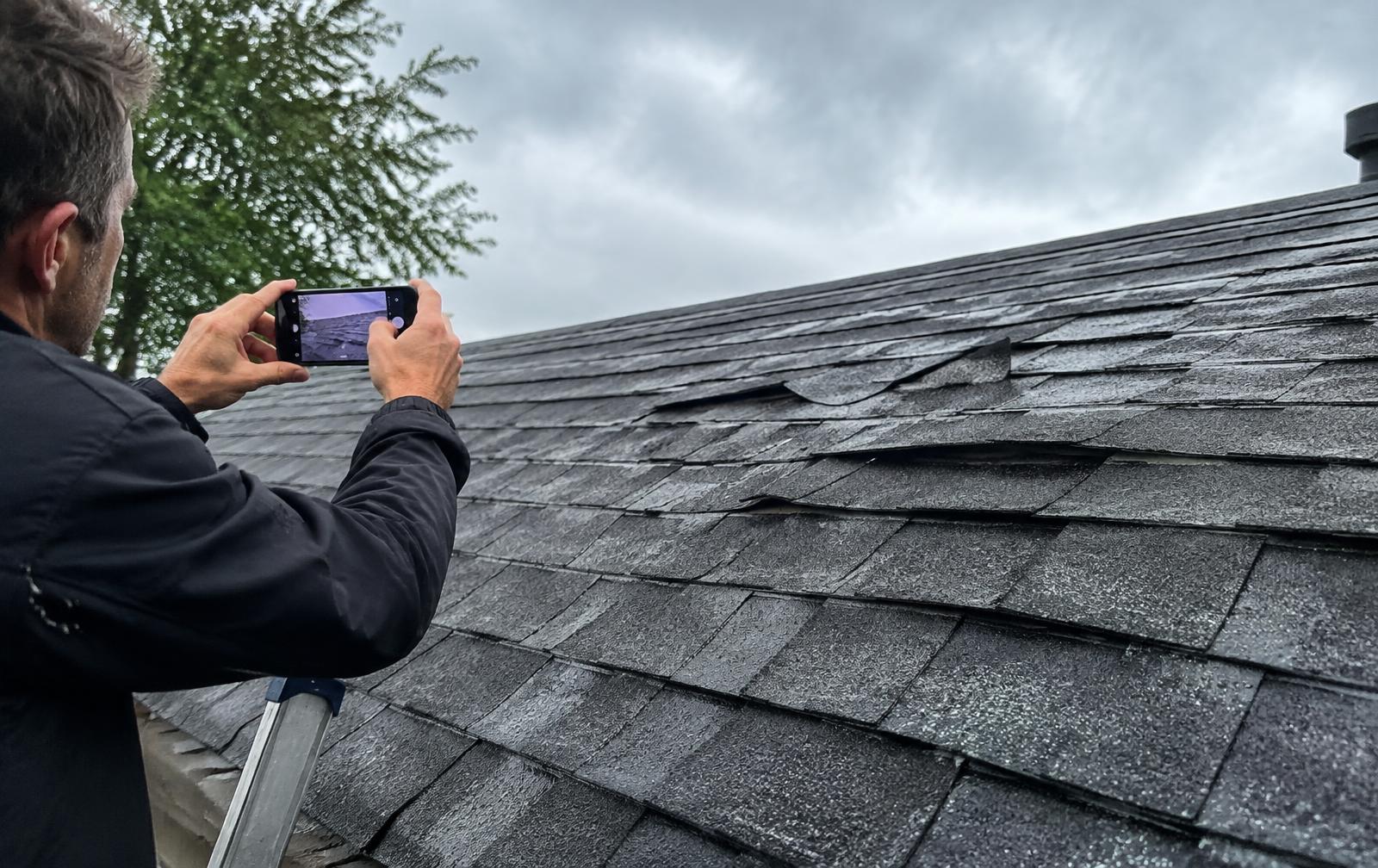
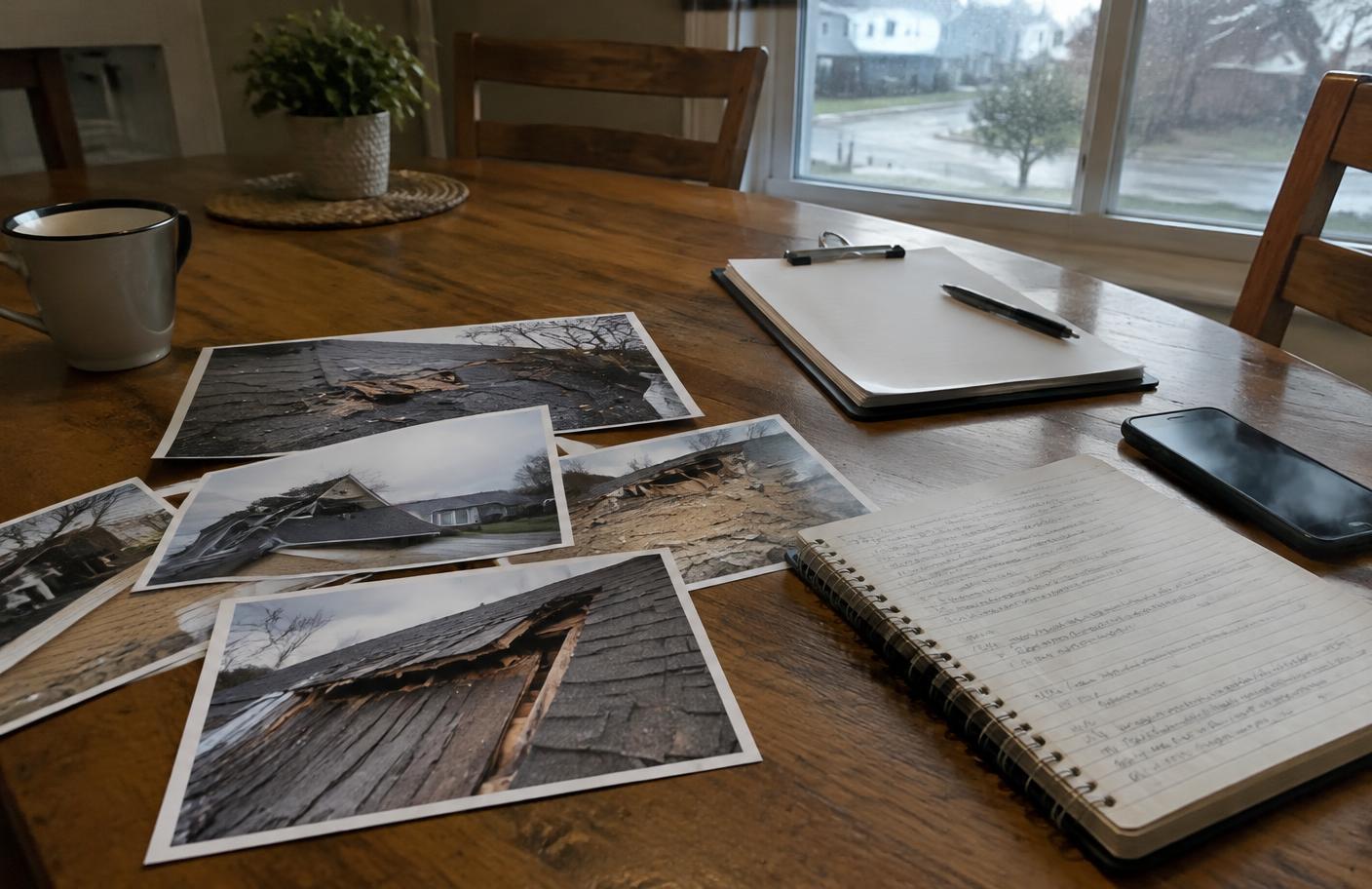
Good records make a claim easier. Take wide photos of the house from each side. Then take close photos of damage you can see from the ground or a window.
Inside, photograph stains, drips, wet floors, and damaged items. Write down when the storm happened and when you first saw the damage. Do not climb on the roof to take photos.
Step 2: Stop more damage
If water is coming in, call for an emergency roof cover. Catch water in buckets, move things, and turn off power near wet lights or outlets.
Photograph the damage before the cover goes on, and again after. Save the receipt. These steps show you acted to protect your home.
Step 3: Learn your policy
Every policy is different. Look for your deductible, any time limits to report damage, and whether your roof is paid at full replacement value or at a depreciated value.
If you do not understand something, call your agent. Ask them to explain it in plain words.
Deductible basics
Your deductible is the part of the claim you pay before insurance pays. Some policies have a separate deductible for wind or hail.
If the repair is small and close to your deductible, a claim may not help much. That is your choice to make with your agent. We will not suggest ways around your deductible. That is against the rules and is not fair to you.
Step 4: Get ready for the adjuster
The adjuster works for the insurance company and decides what the policy covers. Have your photos, notes, and receipts ready.
Point out each area of damage, inside and out. If you have a roofer's report, share it. You can ask questions and ask for a copy of the adjuster's report.
Step 5: Repair scope and choices
The scope is the list of work to be done. It might be a few shingles, one slope, or a full roof.
Ask what material the scope uses. If you have slate, cedar, or copper, the repair should use matching materials when possible. If something seems missing, like flashing or vents, ask about it. In the end, you decide who fixes your roof.
Watch out for storm chasers
After big storms, out-of-town crews may knock on doors. Be careful with anyone who pressures you to sign right away or promises insurance will pay for everything.
Pennsylvania requires home improvement contractors to register with the state Attorney General. You can look up a contractor's registration before you sign. Get the plan in writing and read it first.