Repair or replace? A simple way to decide
Start with three questions. How old is the roof? How much of it is damaged? And is the damage in one spot or everywhere?
If the roof is fairly young and the problem is in one place, like a chimney leak or a few torn shingles, a repair usually makes sense. If the whole roof is worn, brittle, or leaking in many places, money spent on patches may be wasted. That is when a new roof starts to make more sense.
Slate is different. A slate roof can often be repaired for many years, even when it is very old. Before you replace slate, ask for a slate repair opinion. Our slate roof repair page explains how that works.
Picking the right roof for your home
Asphalt shingles are the most common roof on Doylestown homes. Architectural shingles are thicker and have a layered look. They fit most homes built in the last 60 years.
Natural slate fits many older stone and brick homes. It is heavy and needs a strong frame, but it can last a very long time. Synthetic slate looks like slate and weighs less.
Cedar shake gives a warm, natural look that suits farmhouses and cottages. It needs good airflow and care to keep it from rotting.
Standing seam metal works well on porches, low slopes, barns, and modern homes. It sheds snow and rain fast. Copper is the classic match for trim on slate and historic roofs.
If your home is in the Doylestown Borough Historic District, the material you pick may need review before work starts. Our HARB page has the basics.
Tear-off: why the old roof comes off
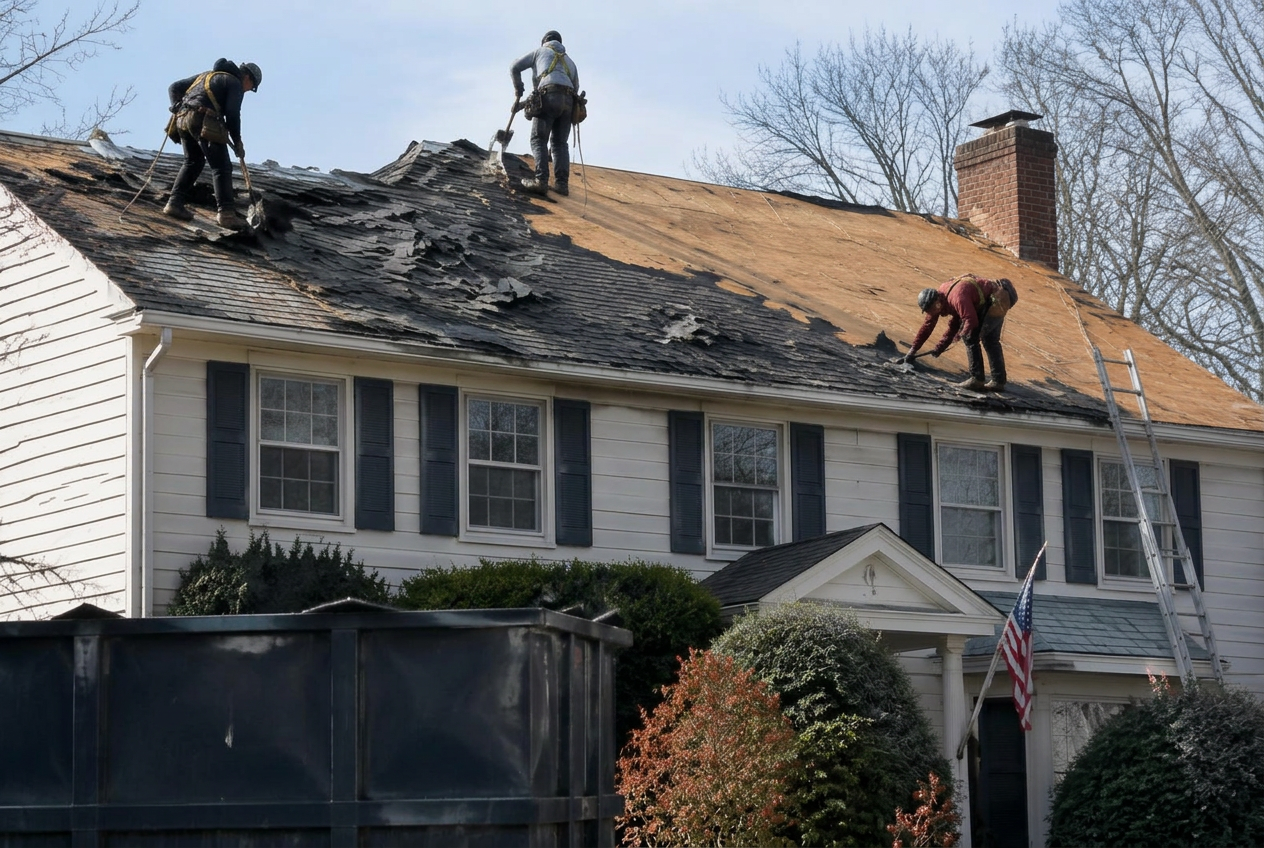
A tear-off means the old roof is removed down to the wood deck. This lets the crew see and fix rot, soft spots, and old leak damage that you cannot see from below.
Putting a new layer on top of an old one hides problems and adds weight. In Doylestown, a new roof also cannot go over slate, wood shake, asbestos, or clay tile at all. A full tear-off is the cleanest start for a long-lasting roof.
Decking, underlayment, and ice barrier
The deck is the wood that the roof is nailed to. Older homes may have wide boards. Newer homes often have plywood or OSB sheets. Any piece that is soft, cracked, or rotten should be replaced.
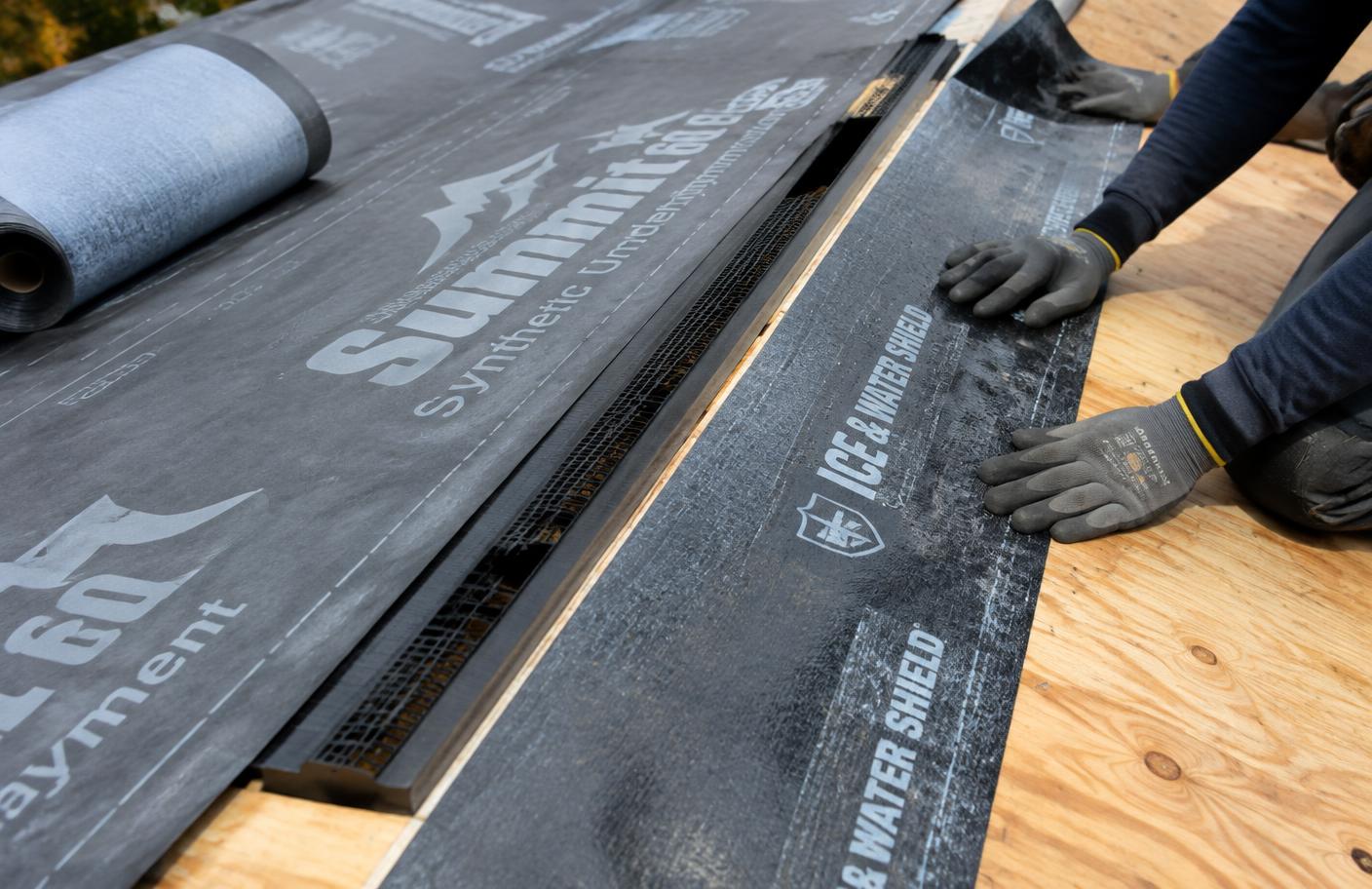
Underlayment goes over the deck as a second layer against water. An ice and water barrier goes along the edges, in valleys, and around chimneys and walls. These are the places where ice dams and heavy rain push water the hardest.
Ventilation: the part most people forget
Your attic needs to breathe. Cool air should come in low at the eaves, and warm, wet air should leave high near the ridge.
When air cannot move, heat bakes shingles in summer and moisture drips on wood in winter. That can shorten roof life and help ice dams form. A good replacement plan checks the attic and sets up the right mix of intake and exhaust vents.
Flashing: where most leaks start
Flashing is the metal that seals the joints where the roof meets something else: a chimney, a wall, a skylight, a pipe, or a valley.
Reusing tired flashing on a new roof is a common shortcut. It can cause leaks soon after the job is done. A good replacement puts in new step flashing at walls, new pipe boots, and new or repaired chimney flashing. On historic homes, copper is often the right choice.
What to expect on work day
Most asphalt roofs on an average home take one to a few days. Slate, cedar, and metal roofs take longer because each piece is set by hand.
Move cars out of the driveway. Take pictures off walls on the top floor, since hammering can shake them. Keep kids and pets away from the work area. The crew will cover plants, use a dumpster or trailer, and sweep for nails at the end.