What counts as a roof emergency?
A roof emergency is any problem that lets water or weather into your home right now, or could make part of the house unsafe. A drip into a bucket counts. A tree limb through the roof counts. A missing patch of shingles before more rain counts too.
A small stain that has been there for months is usually not an emergency. It still needs help, but it can wait for a normal visit. If you are not sure, call and describe what you see. You will get help deciding how fast it needs to be handled.
How an emergency leak gets stopped
First, the crew finds where the water is getting in. Water can run along wood before it drips, so the drip inside is not always under the hole outside.
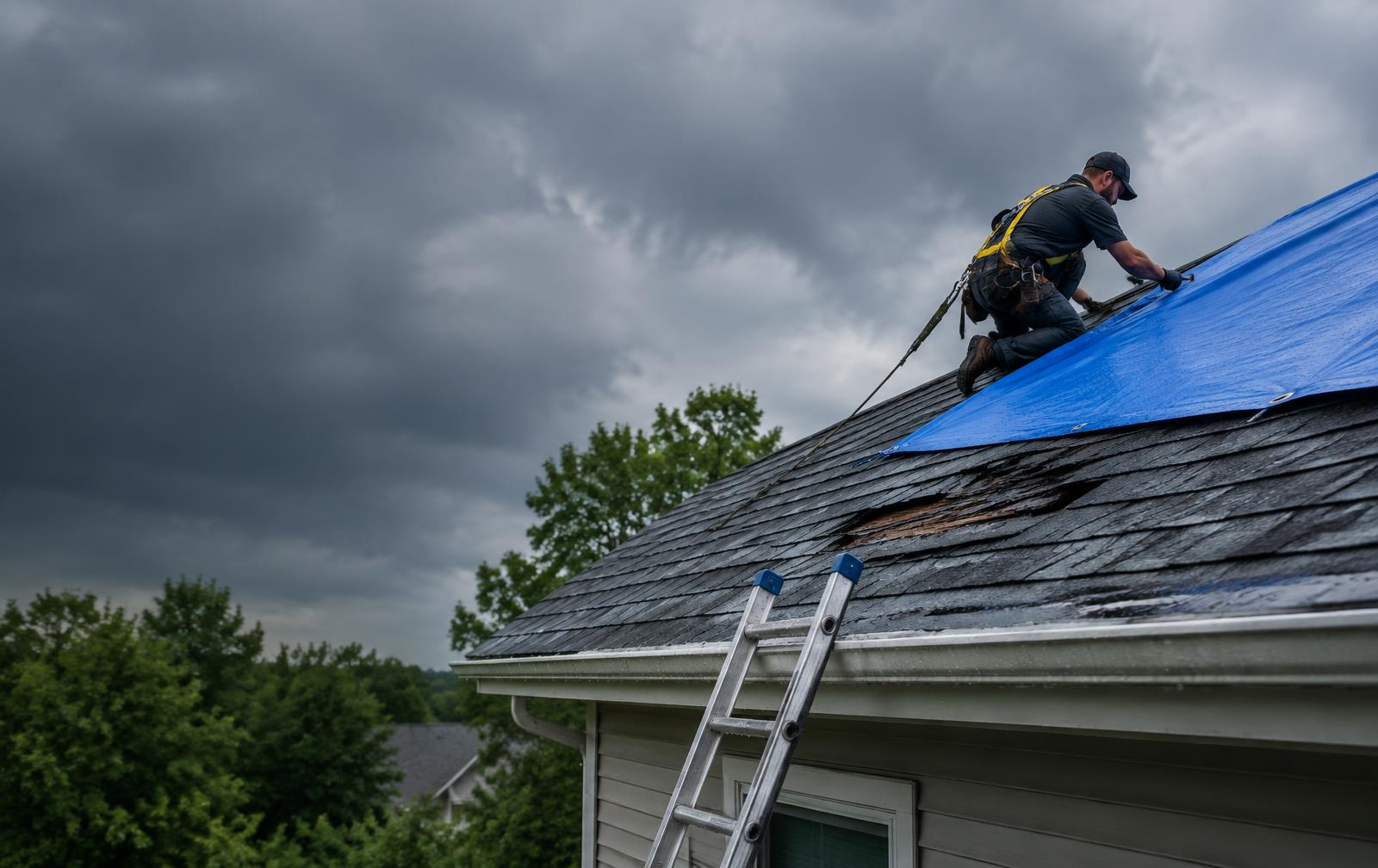
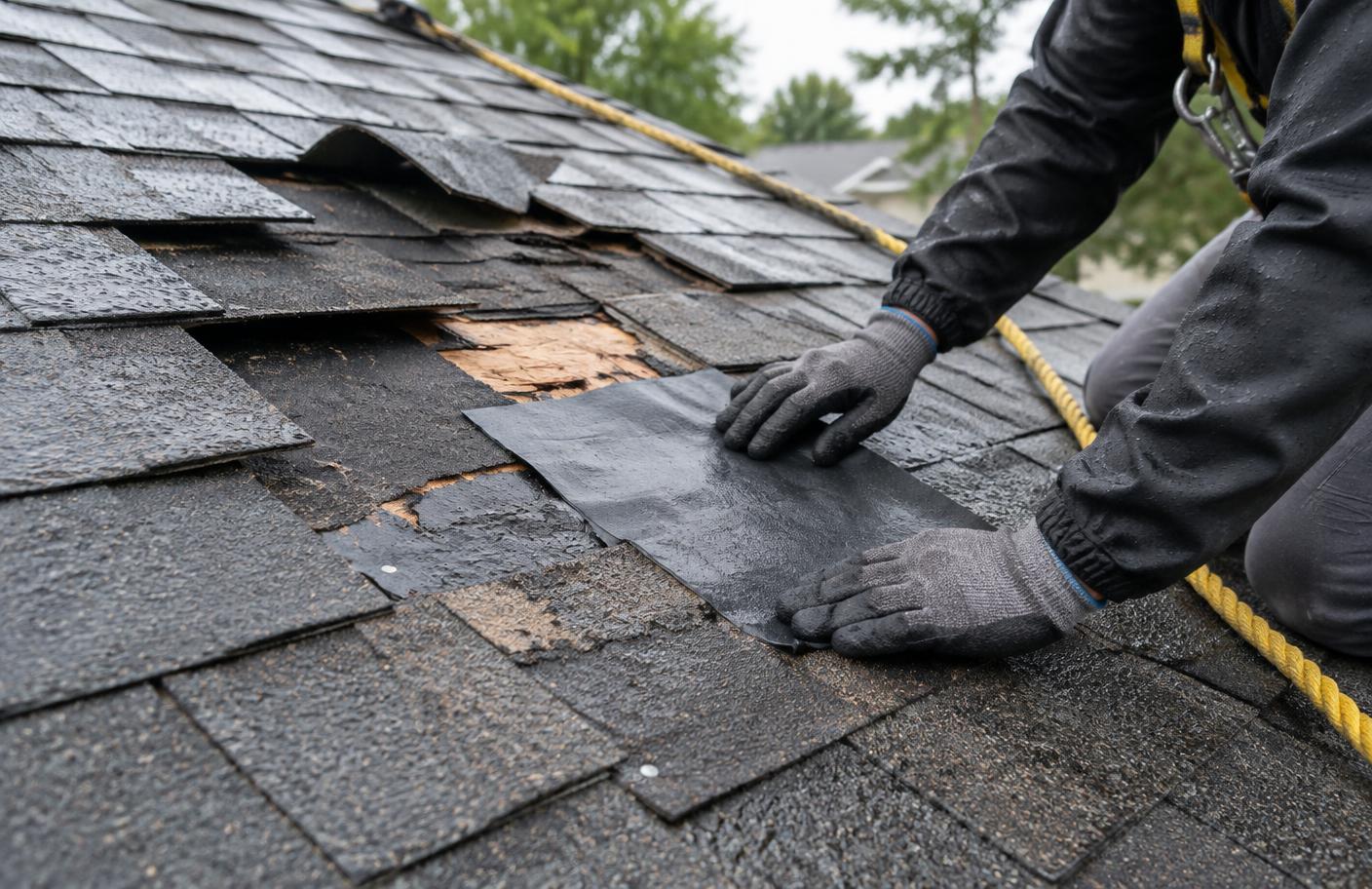
Next, the opening is covered. On a shingle roof this may be a heavy tarp tied down past the ridge, or a quick patch of new underlayment and shingles. On slate, the cover is set gently so the stone is not cracked by weight or nails. On metal, loose panels are held down so wind cannot peel them farther.
Last, you get photos and a plain-language note about what was done and what still needs a full repair.
Storms seen around Doylestown
Central Bucks gets summer thunderstorms with strong wind, fall storms with heavy rain, and winter snow and ice. Each one hurts a roof in a different way.
Wind lifts and tears shingles, mostly on edges and ridges. Heavy rain finds weak flashing at chimneys, skylights, and walls. Snow that melts and freezes again can build an ice dam at the roof edge and push water up under shingles.
Old trees are part of what makes the area beautiful. They also drop limbs on roofs in big storms. If a tree is on your roof, stay away from it and call. Some trees need a tree service first before roof work can start.
After the emergency: the real repair
A tarp is a short-term cover. It is not the fix. Once the weather clears, the roof gets a closer look. Then you get choices: repair the damaged spot, repair a whole section, or, if the roof was already worn out, talk about a new roof.
For slate and other historic roofs, the goal is still to save good material when it can be saved. For newer asphalt roofs, matching shingles and fixing the flashing is often enough. You decide on the plan before the full repair begins.
Insurance and storm damage
Many homeowners ask if insurance will help. That cannot be promised. It depends on your policy and on what the adjuster finds.
What helps most is good records: the date of the storm, photos before anything is moved, photos of the cover going on, and receipts. Our insurance claim guide explains these steps in more detail.